

Press & Media
The press office is the central contact point for journalists and media and provides information about the University of Augsburg and offers experts and scientists for all topics of research. In addition to current news and the calendar of events,? you will find information and contact persons for our service offered for journalists.
contact for journalists
Press releases
How can Scottish wind energy be stored as hydrogen?
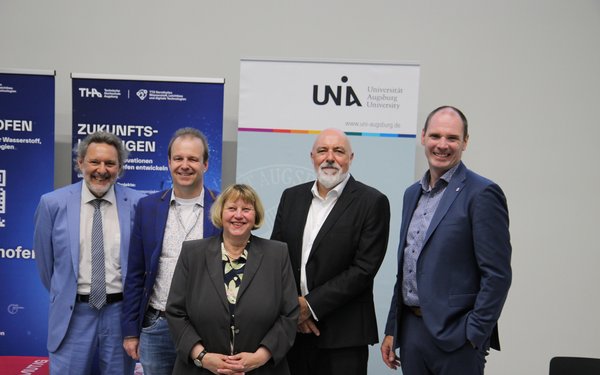
The aim of a cooperation agreement signed by the Technical University and the University of Augsburg with the University of the Highlands and Islands in Inverness, Scotland (UHI), is to further research into resilient hydrogen-based energy systems. The universities intend to strengthen their existing academic collaboration. To this end, they signed a Memorandum of Understanding on Mai 11th.
How the Voice of Service Robots Can Convey Social Support
When service robots make mistakes, it is not only important whether customers receive compensation. The robot’s voice can also shape how the situation is perceived. A human-like voice can make customers feel more supported after a service failure.?

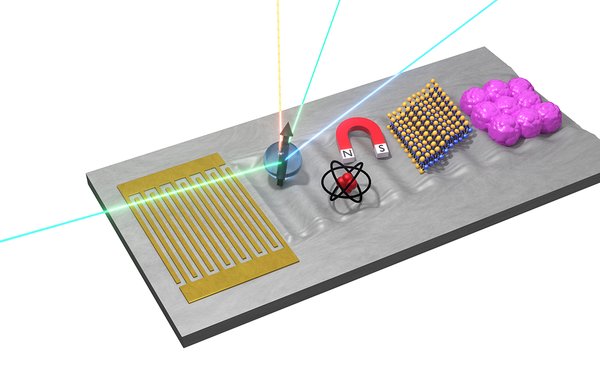
New “Roadmap” highlights surface acoustic wave technologies
New corporate design: A strong design for strong ideas
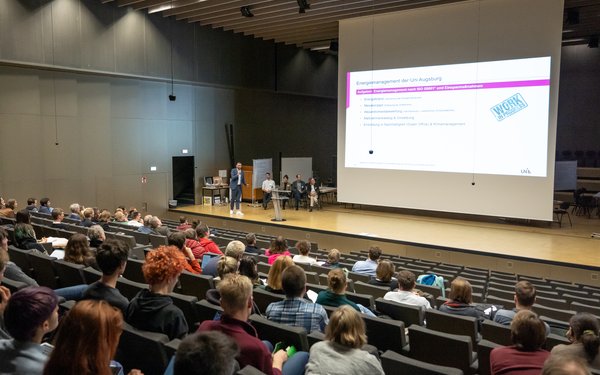
Contribute Your Ideas to the Open Forum on Developing a Sustainable University
From Handwritten Letters to Social Media
The first summer school for the degree programmes European Cultures of Communication will take place from the 31st of August to the 4th of September 2026. Doctoral candidates and master’s students can learn about and explore the development of writing and communicative practices from the early modern period to the present. Applications are open until the 29th of May 2026.

One atom makes all the difference: Heat transport through molecules controlled in a targeted manner for the first time
In close collaboration with researchers from the University of Michigan (USA), physicists in Augsburg have succeeded for the first time in proving experimentally and theoretically that heat transport through molecules can change by up to a factor of two through the exchange of a single atom. The study was published in the highly renowned journal Nature Materials.

Climate change: Research Project MEDICUS Develops Climate Adaptation Strategies to Protect Health in Cities

2026 Heinz Maier-Leibnitz Prize for mathematician Dominik Schmid
The University of Augsburg is delighted to announce an outstanding honour for one of its early-career researchers: Assistant Professor Dr Dominik Schmid has been awarded the 2026 Heinz Maier-Leibnitz Prize, regarded as Germany’s most prestigious award for researchers in the early stages of their careers. This was announced by the Executive Board of the German Research Foundation (DFG) in Bonn.
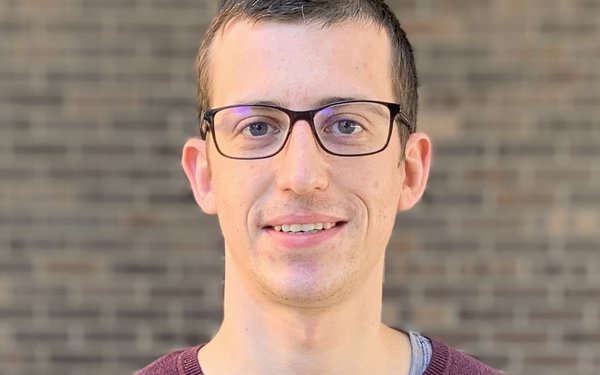
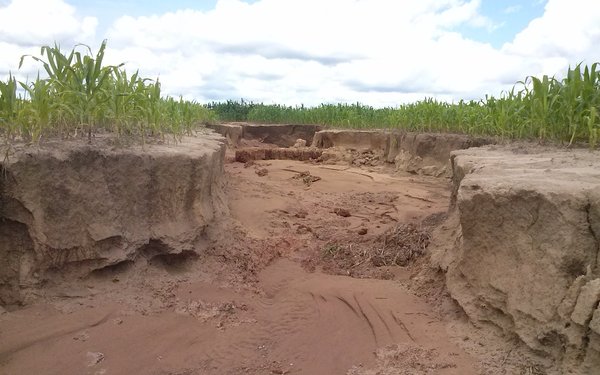
How soil erosion in tropical regions affects agriculture, water balance and climate
It‘s a change that often goes unnoticed: while tropical agricultural regions are delivering ever higher yields, soils may be changing at a faster pace than we think?— and not for the better. From March 2026, a new Emmy Noether Research Group at the University of Augsburg, led by soil scientist Dr. Pedro Batista, will focus on this barely visible but globally significant process.
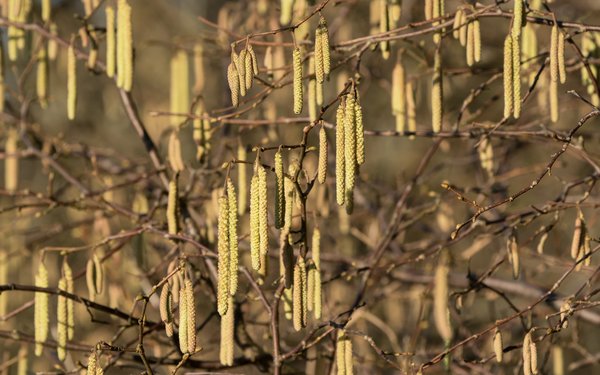
Urban greenery in Augsburg: health booster or pollen trap?
Urban greenery is good for individual health and the inner-city climate. For allergy sufferers, however, it can be a burden. Researchers at the Chair of Environmental Medicine are investigating how urban vegetation affects allergies. They are co-authors of an international guideline on health-promoting urban planning.
Frontiers Planet Prize 2026: Prof. Kunstmann is one of three nominated in Germany
Prof. Harald Kunstmann, a hydrologist, from the University of Augsburg belongs to a group of three German candidates nominated by the Berlin-Brandenburg Academy of Sciences and Humanities (BBAW) for the final global round of the Frontiers Planet Prize 2026. The prize honours academic breakthroughs that contribute to the stabilisation of the planet’s ecosystem.