
How can Scottish wind energy be stored as hydrogen?
Augsburg University and Augsburg University of Applied Sciences sign a memorandum of understanding with the University of the Highlands and Islands in Inverness
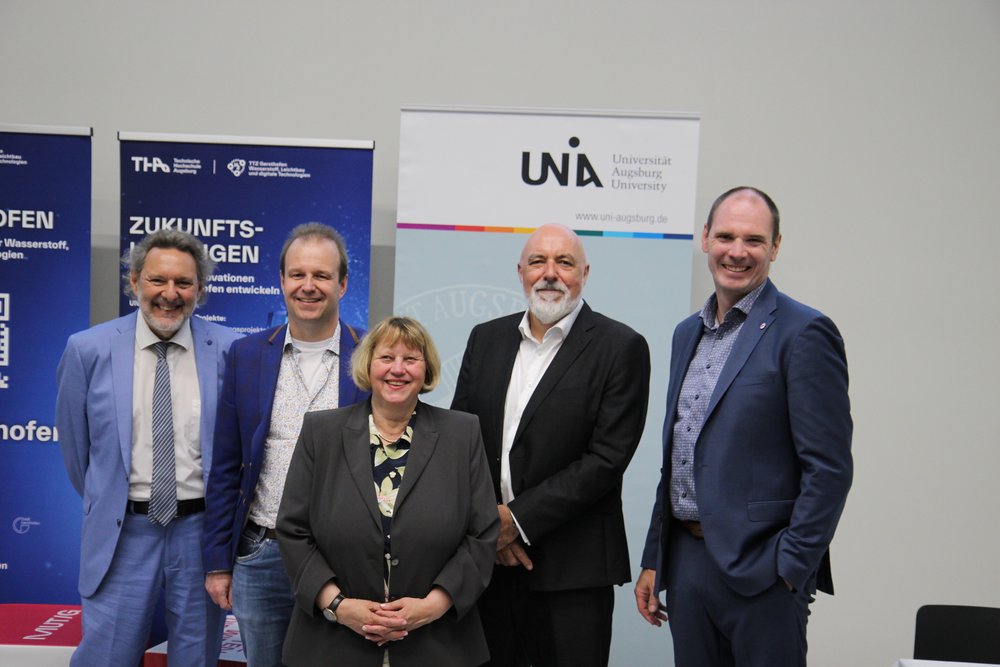
The aim of a cooperation agreement signed by the Technical University and the University of Augsburg with the University of the Highlands and Islands in Inverness, Scotland (UHI), is to further research into resilient hydrogen-based energy systems. The universities intend to strengthen their existing academic collaboration. To this end, they signed a Memorandum of Understanding yesterday, 11 May. The memorandum establishes the framework for long-term academic cooperation. Plans include joint research and development projects, student and researcher exchanges, the organisation of joint academic events and individual courses, as well as the transfer of knowledge in technology fields relevant to the future. The focus is on renewable energies, hydrogen technologies, sustainable material systems and life-cycle analyses. “Inverness and Augsburg are a perfect match on this issue,” said Weihrich at the signing ceremony. “Scotland has a surplus of green energy, and consequently wind and tidal energy are being significantly expanded there. We, in turn, have the technology and know-how for the production, storage, utilisation and system integration of hydrogen, and can work together to build resilient European energy systems from surplus energy and hydrogen – systems that are sustainable, modelled on nature, and secure resources for the next generation as well.” University President Prof. Dr. Sabine Doering-Manteuffel emphasises the significance of the agreement for the strategic direction of research in Augsburg: “The current global challenges highlight just how important stable international cooperation and the joint development of climate-neutral, resilient energy systems are. Hydrogen is a key component of a sustainable energy supply – and this is precisely where our collaboration with the University of the Highlands and Islands comes in.” ? Prof. Dr Frank Danzinger, Vice-President for Technology and Research at Augsburg University of Applied Sciences, added: “I am delighted to be signing a Memorandum of Understanding at an international level today. This lays the foundation for cooperation between our universities. Augsburg is a leading technology region when it comes to hydrogen. This is the right place for them. This is where the transfer of research into industrial practice succeeds. With this Memorandum of Understanding, we are now laying the formal foundation for a valuable exchange in which we can learn a great deal from one another – scientifically, technologically and culturally."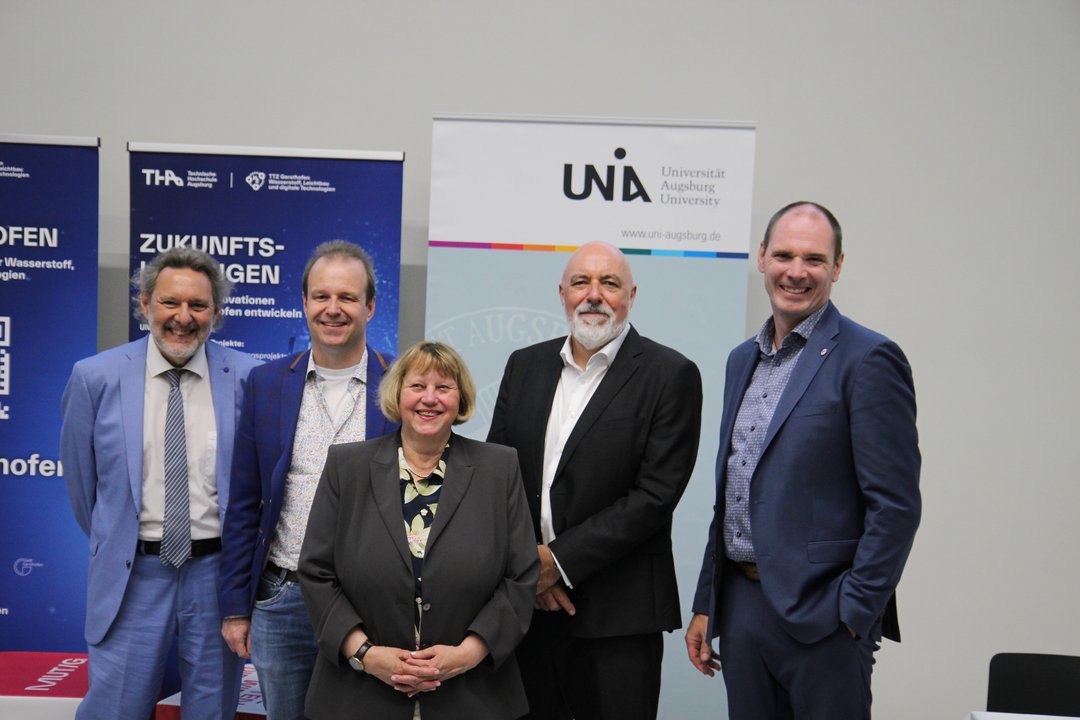
The partnership with Inverness further strengthens the strategic development of hydrogen-related research and networking in Augsburg. Several years ago, the H2.UniA research group was established at the University’s Institute for Materials Resource Management (MRM) by Prof. Dr Richard Weihrich, spokesperson for the Hydrogen Working Group and Professor of Materials and Resource Chemistry, and Dr Timo K?rner of the Materials and Environmental Research User Centre. It brings together research on materials for hydrogen technologies, electrocatalysis, resource efficiency and the circular economy.
Augsburg University of Applied Sciences will work on-site in Inverness via the Gersthofen Technology Transfer Centre on the topics of hydrogen tanks, LH2 sloshing and system simulations covering the entire hydrogen production chain. Joint teaching programmes are being considered, such as an international research master’s degree.
Both universities are active on the Hydrogen Advisory Board for the Augsburg economic region. This close regional network is now ideally complemented internationally by the collaboration with the University of the Highlands and Islands.Objective: Storing surplus wind energy as hydrogen
The President of the UHI, Prof. Christopher O’Neil, said that the basis for success lies in high standards of quality in scientific work and commitment. “But what is also needed is a sense of curiosity and a certain playfulness to realise visions. I am very glad that we have found partners in Augsburg with this same attitude and approach.”Developing resilient energy systems
With this memorandum, Augsburg’s universities reaffirm their commitment to further advancing interdisciplinary and internationally networked research in the field of hydrogen and energy technologies, and to developing innovative solutions for a sustainable future in collaboration with strong partners.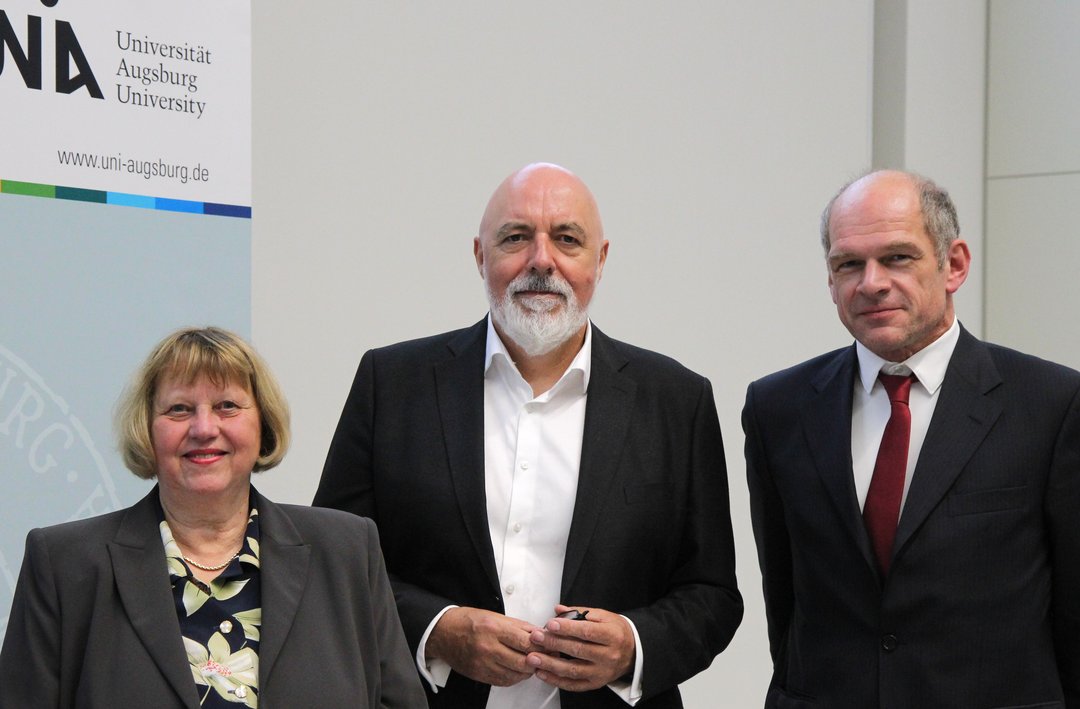
Wissenschaftlicher Kontakt
Medienkontakt
Press images available for download