

Industrial Ecology
Connecting science, society and industry for sustainable resource use
The ‘Industrial Ecology’ research focus is a central pillar of the University of Augsburg’s Green Transformation. It coordinates the Green Research Network BRaVE and, through its scientific expertise, supports the Green Hospital project based at the ZfK. In this way, the research focus makes a significant contribution to linking the ‘Health’ and ‘Environment’ profile areas. Of particular importance is the international networking with renowned visiting scholars, as well as the implementation of numerous practice-oriented projects that effectively drive knowledge transfer to society and industry.
In terms of content, the focus lies on researching and optimising global resource flows, as well as analysing their ecological and social impacts. Methodologically, this involves the use of criticality and material flow analyses, life-cycle assessment, social life-cycle assessment, and techno-economic and socio-ecological evaluations.
?
THE FOLLOWING ARE RESPONSIBLE FOR THE ‘INDUSTRIAL ECOLOGY’ FOCUS AREA:?
Academic exchange programmes and career opportunities within the framework of ‘Metabolism on Islands’
PhD Exchange Programme
A special PhD programme enables students to apply as part of the ‘Island Innovation Hub’. Partner institutions include Leiden University, the University of Sydney, the University of Waterloo, the University of Augsburg and others.
?
Further information on Metabolism of Islands:
A ten-week online course (with certificate) has been developed for this purpose. Further information can be found at the following link:
?
?
?
?
Information about Prof. Simron J. Singh::
The collaboration centres on issues of resource management, systems analysis and socio-metabolic risks. An initial implementation project is investigating the resilience of small island states such as the Maldives, Hawaii and Fiji to the consequences of climate change, such as rising sea levels. This is based on the BRAVE (Building Climate Resilience for a Vital Environment) sub-project entitled ‘Raw Material Demands for a Climate Resilient Future’, which, as part of the University of Augsburg’s Green Transformation, is already addressing the specific challenges faced by island regions. In addition, findings from the ongoing, internationally funded research project RECOVER (“Resilience to Climate Vulnerability and Environmental Risk”), which investigates resilience to environmental and climate risks, are being incorporated.
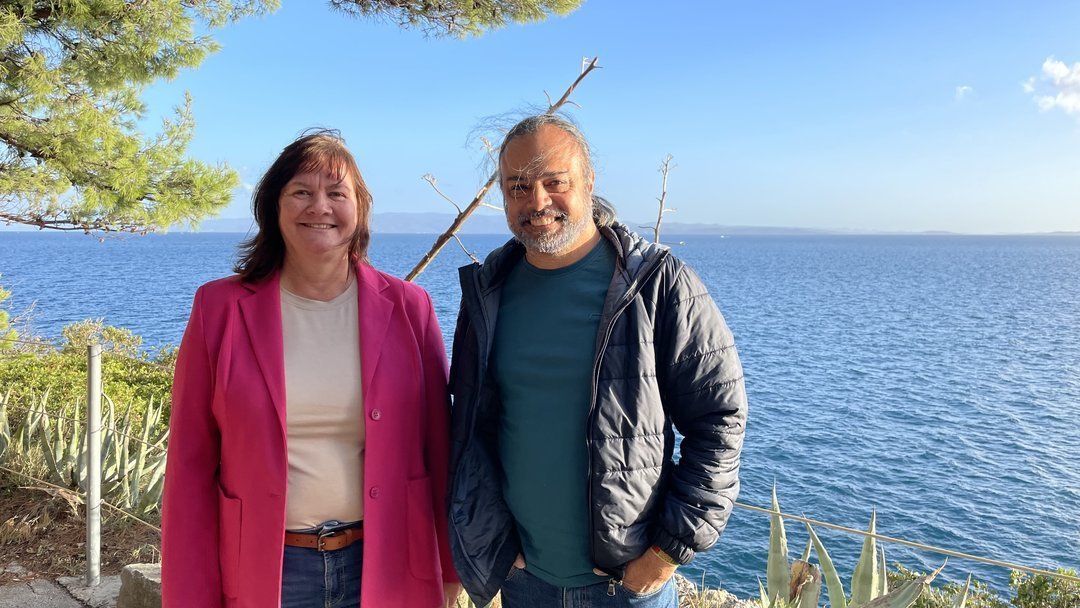
Information about Prof. Dr Guido Sonnemann:I
The methods developed are applied to specific technologies and products, such as electric vehicles, high-tech materials, and future energy and electronics systems. This enables material dependencies to be identified at an early stage and more sustainable technology and innovation strategies to be developed.
- Phone: +49 821 598-3948
?
Ausgew?hlte Publikationen:
?
Singh S., Linsmaier S., Choudhary C., Wietschel L., Azfa A., Wiedenhofer D., Mohamed S., and Thorenz A.: Material requirements for adapting to climate change in the Maldives, Nature Scientific Reports (2026) (under review)
?
Assies F., Wietschel L., Kamali K.A., Gusseva T., Sonnemann G., Thorenz A., Tuma A.: Towards Contemporary and Dynamic Life Cycle Inventory Databases: The Case of German Electricity, Applied Energy (2026) (under review)
?
Martin Bruckler, Lars Wietschel, Selina Sartor, Andrea Thorenz und Axel Tuma: Encounter the unforeseen: resilient supply chain modeling for a sustainable bioeconomy, Journal of Industrial Ecology 29, 908-923 (2025)
?
Felix Assies, Lukas Messmann, Andrea Thorenz und Axel Tuma: Life cycle sustainability assessment of substituting fossil based with biogenic materials: a German case study on drinking cups and insulation boxes, Journal of Industrial Ecology 29, 1551-1567 (2025)
?
Christoph Helbig, Jonas Huether, Charlotte Joachimsthaler, Christian Lehmann, Simone Raatz, Andrea Thorenz, Martin Faulstich und Axel Tuma, A terminology for downcycling Journal of Industrial Ecology 26, 1164-1174 (2022)
?
Alexandre Charpentier Poncelet, Christoph Helbig, Philippe Loubet, Antoine Beylot, Stéphanie Muller, Jacques Villeneuve, Bertrand Laratte, Andrea Thorenz, Axel Tuma und Guido Sonnemann?Losses and lifetimes of metals in the economy, Nature Sustainability 5, 717-726 (2022)
?
Sandra Boldoczki, Andrea Thorenz und Axel Tuma: Does increased circularity lead to environmental sustainability? The case of washing machine reuse in Germany
Journal of Industrial Ecology 25, 864-876 (2021)
?
Jair Santillán‐Saldivar, Tobias Gaugler, Christoph Helbig, Andreas W. Rathgeber, Guido Sonnemann, Andrea Thorenz und Axel Tuma : Design of an endpoint indicator for mineral resource supply risks in life cycle sustainability assessment: the case of Li‐ion batteries
Journal of Industrial Ecology 25, 1051-1062 (2020)
?
Alexander Cimprich, Vanessa Bach, Christoph Helbig, Andrea Thorenz, Dieuwertje Schrijvers, Guido Sonnemann, Steven B. Young, Thomas Sonderegger und Markus Berger
Raw material criticality assessment as a complement to environmental life cycle assessment: examining methods for product-level supply risk assessment, Journal of Industrial Ecology 23, 1226-1236 (2019)
?
Eskinder D. Gemechu, Christoph Helbig, Guido Sonnemann, Andrea Thorenz und Axel Tuma
Import-based indicator for the geopolitical supply risk of raw materials in life cycle sustainability assessments, Journal of Industrial Ecology 20, 154-165 (2016)
?
?