

Lecture Series: Medical Information Sciences
General information
?
?
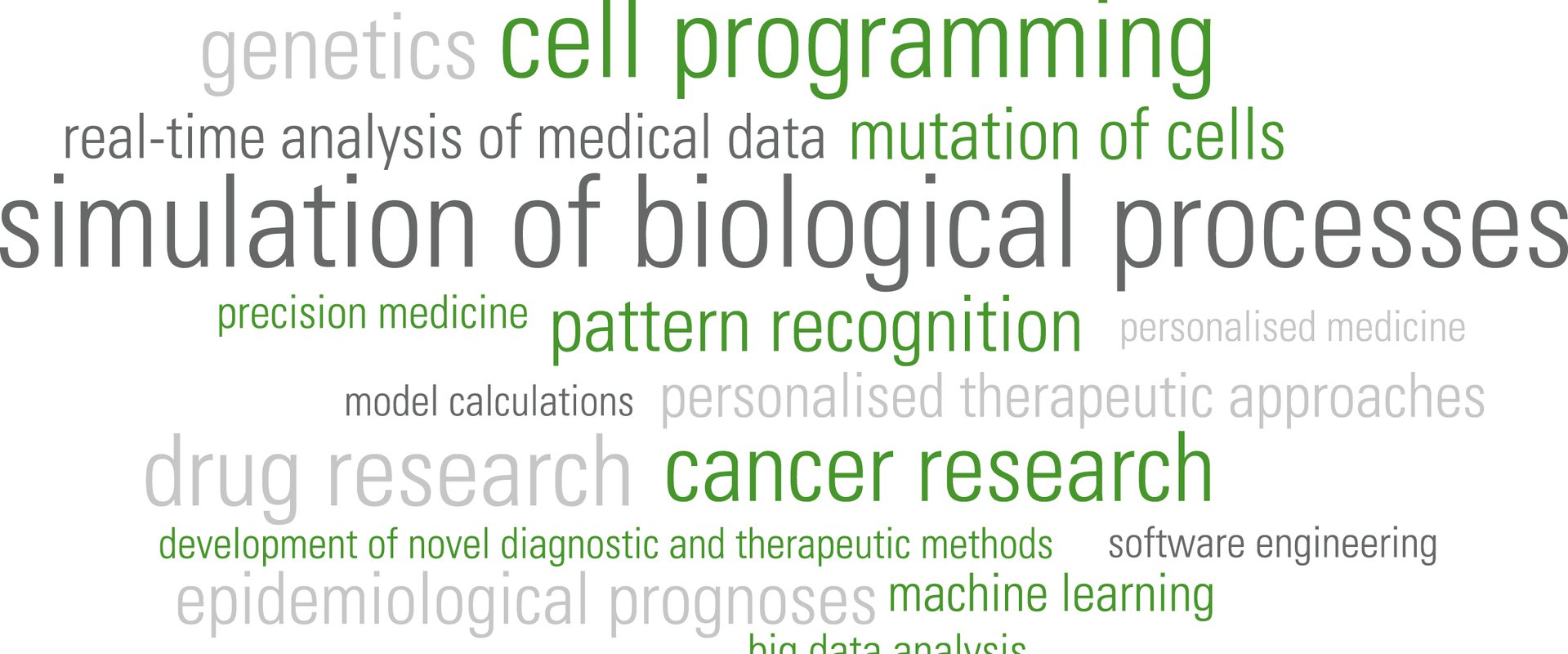
The future of medical research and healthcare is personalized, digitized, and data-driven. The provision, analysis, and interpretation of this data rely on interdisciplinary collaborations. Thus, the foundations for future medical progress are laid at the interface of medicine and computer science.
?
The field of research and studies Medical Information Sciences has?been?established?as a response?to?this?development,?introducing a guest lecture?series?of?the same name in the winter semester of 2022/2023. It adresses current?questions from science and provides insights into corresponding areas of industry.
?
?
?
The MIS lecture series will take place this summer semester on Thursdays at 4:00 pm at the Faculty of Applied Computer Science in Lecture Hall N2045.??
?
A shared electronic calendar for the MIS lecture series can be found at the following link: https://bioinf-nextcloud.informatik.uni-augsburg.de/apps/calendar/p/ppNc2sNPDMFBGKoG?(You can access the registration link via the three dots to the left of the calendar name.)
?
Additionally, the events will be live-streamed. If you are interested in attending the live-stream, we kindly ask you to register by sending an informal email to office.bioinf@informatik.uni-augsburg.de?on time.?
?
The lectures aim at an interested professional audience and will be held in English.
?
More information about the speakers and their lectures are available on this website or via the official MIS newsletter, which you can register for at the bottom of this webpage.
?
?
In addition, prior to each lecture, we offer an opportunity?to?discuss individual scientific?questions, topics or cooperation opportunites with?the?speaker. If you are interested, please register in advance by sending a short message to office.bioinf@informatik.uni-augsburg.de.
?
Below, you find the schedule for the summer semester 2026?with further information on each single lecture:
?
schedule for the summer semester 2026
Location: Lecture hall N2045 (Faculty of Applied Computer Science)
?
Abstract
Mechanistic modeling provides a quantitative framework to connect molecular properties, ocular physiology, and clinical outcomes. The eye represents a uniquely accessible system in which key processes - such as diffusion, anatomical barriers, and fluid turnover - can be integrated into ODE-based models to describe drug distribution and elimination. These principles explain central observations such as ocular half-life and its translation across species, by linking molecular size and eye geometry to pharmacokinetics.
A major opportunity arises from combining such models with increasingly rich longitudinal data of drug effect. High-frequency measurements from emerging technologies such as home optical coherence tomography (OCT) capture disease dynamics at an unprecedented temporal resolution. Integrating these data with pharmacokinetic/pharmacodynamic (PK/PD) models enables a more precise characterization of treatment response and has been shown to improve the efficiency of clinical studies by reducing required sample sizes while maintaining statistical power.
Together, these approaches illustrate how mechanistic understanding can be translated into predictive capability - making it possible to infer otherwise inaccessible processes within the eye and to guide therapeutic development. At the same time, important open questions remain, including a deeper understanding of tissue-level distribution and variability in response, offering opportunities for collaborative research at the interface of modeling, data science, and experimental biology.
?
Speaker:?
?
Biography
Dr. Bernhard Steiert is Head of Clinical Pharmacometrics at Roche Pharma Research and Early Development (pRED), Pharmaceutical Sciences, at the Roche Innovation Center Basel, Switzerland. He leads a team of pharmacometricians across therapeutic areas, focusing on the application of modeling and simulation to inform drug development and decision-making.
He obtained his PhD in theoretical physics from the University of Freiburg in 2017, working on modeling and simulation of biological processes. He joined Roche that same year and has since contributed to projects in the preclinical and clinical space in several disease areas, and particularly within ophthalmology. In this context, he also serves as Clinical Pharmacologist, supporting dose selection and development strategy.
His work centers on mechanistic and data-driven approaches, including ODE-based modeling, digital biomarkers, and innovative study designs. He has pioneered the use of high-frequency patient data, such as home OCT, and to the development of novel modeling concepts for clinical decision-making. His interests further include AI-based methods, such as neural ODEs, and questions of model identifiability.
Dr. Steiert collaborates with academic partners and has supervised students and early-career researchers at the interface of biology and modeling.
Location: Lecture hall N2045 (Faculty of Applied Computer Science)
?
Abstract
Dystonia comprises complex motor network disorders characterized by involuntary abnormal postures and aberrant movement patterns that, to date, can only be quantified objectively to a limited extent. I here present a translational approach that links preclinical dystonia rodent models and patients with dystonia through shared kinematic signatures. The starting point is the DYT-TOR1A rat model, in which movement-dependent dystonic patterns are induced by repeated overuse of the forepaw and by peripheral nerve injury using a nerve crush paradigm. These movements are quantified using AI-based computer vision and time-resolved motion analysis to define characteristic kinematic profiles of dystonic movements in the animal model.
In a second step, I investigated to what extent these kinematic features can also be identified in humans. To this end, patients with cervical and other forms of dystonia were analyzed using comparable computer-vision tools applied to standardized video recordings. This enabled a data-driven characterization of dystonia subtypes, an objective assessment of treatment effects, for example under botulinum toxin therapy or deep brain stimulation, and a systematic search for structural similarities in movement kinematics between animals and humans. Overall, i here illustrate how kinematic signatures derived from overuse and nerve injury models can be translated into an AI-based translational framework that may provide new biomarkers for subtype classification, treatment monitoring, and, in the longer term, disease-modifying interventions in dystonia.?
?
Speaker:? Prof. Dr. Chi Wang Ip
?
Biography
Prof. Dr. Chi Wang Ip is neurologist and translational neuroscientist with a strong clinical and experimental focus on neurodegenerative and hyperkinetic movement disorders, particularly Parkinson’s disease and dystonia. His research adopts a rigorous translational approach, integrating pathophysiologically relevant animal models with neuroimmunology, multimodal biomarkers, neuromodulation, molecular imaging, and AI-assisted kinematic phenotyping. The overarching aim is to develop innovative diagnostic, symptomatic, disease-modifying, and preventive therapeutic strategies along the full translational continuum—from molecular mechanisms to patient care.
?
Since 2025,?Prof. Dr. Chi Wang Ip?has served as W2 Professor of Translational Neurology with a focus on neurodegenerative diseases at the University Hospital Würzburg. He has been Deputy Director of the Department of Neurology at the University Hospital Würzburg since 2022 and he has held the position of Senior Consultant Neurologist since 2020. He is a board-certified neurologist since 2010 and has led the Movement Disorders and Botulinum Toxin Clinic since 2010.
Location: Lecture hall N2045 (Faculty of Applied Computer Science)
?
Abstract
Ultrasound is safe, real-time, portable, and inexpensive, yet its clinical use remains heavily constrained by operator dependence. High-quality scans require substantial expertise, and trained sonographers or radiologists are not always available across hospitals, outpatient settings, or underserved regions. This talk presents a research vision for democratizing ultrasound imaging through robotics and artificial intelligence.
The presentation will outline intelligent ultrasound systems that can understand the imaging task, guide or automate scan acquisition, assess image quality, estimate anatomical coverage, flag uncertainty or suspicious findings, and support expert review when necessary. This shifts ultrasound from a purely expert-driven procedure toward a scalable workflow in which robotic platforms, AI-based perception, and decision-making modules assist acquisition, while clinicians remain responsible for final validation and diagnosis.
The talk will further discuss key methodological components underlying this vision, including ultrasound image understanding, quality assessment, anatomical completion, robot-assisted scanning, high-level orchestration with foundation models, learning-based scan policies, trustworthy human–AI interaction, and neural rendering methods such as Ultra-NeRF for retrospective virtual re-scanning. Together, these directions aim to make ultrasound imaging more accessible, reproducible, and clinically useful at scale.
?
Speaker:? Dr. Mohammad Farid Azampour
?
Biography
Mohammad Farid Azampour is a Postdoctoral Researcher at the Chair for Computer Aided Medical Procedures (CAMP) at the Technical University of Munich, where he works with Nassir Navab on medical image analysis, ultrasound imaging, robotics, and physics-based deep learning. At CAMP, he leads the Ultrasound Image Analysis Group and co-leads the Robotic Ultrasound team. His research focuses on making ultrasound more intelligent, accessible, and autonomous through methods for image understanding, anatomical reconstruction, neural rendering, and robot-assisted scanning. His recent work spans ultrasound simulation, CT–ultrasound and MR–ultrasound registration, shape completion from sparse ultrasound, and autonomous robotic navigation. In addition to his research, he is active in teaching, mentoring, and scientific service within the medical imaging, computer vision, and robotics communities.
Location: Lecture hall N2045 (Faculty of Applied Computer Science)
?
Abstract
Biotechnology and drug research are facing increasingly complex challenges: diseases are becoming more individualized, drug development remains costly and slow, and the demand for sustainable solutions in medicine continues to grow. Generating new insights in this environment requires more than just data — it requires intelligent integration and interpretation. This talk presents a systematic AI-driven approach to understanding biological systems, based on a globally unique, deeply curated dataset that combines biological sequence data with rich semantic knowledge about entities and their relationships. By integrating large language models, knowledge graphs, and multi-modal data, we enable AI systems to uncover hidden biological patterns and generate actionable insights — often without extensive wet-lab experimentation. The lecture demonstrates how such data can be transformed into practical, explainable applications: from advanced sequence analysis and automated biomarker discovery to precise prediction of biological interactions and AI-supported drug repurposing and repositioning. The result is a new generation of AI tools that accelerates discovery, reduces costs, and supports more sustainable and personalized innovation in the life sciences.
?
Speaker:? Prof. Dr. Prof. h.c. Andreas Dengel
?
Biography
Andreas Dengel is a professor at the Department of Computer Science at the RPTU University of Kaiserslautern-Landau, an Executive Director of the German Research Center for Artificial Intelligence (DFKI) in Kaiserslautern, and head of the Smart Data & Knowledge Services research department at DFKI. Since 2009, he has also held a professorship (kyakuin) at the Department of Computer Science and Intelligent Systems at Osaka Metropolitan University. He has received many awards for his work and scientific achievements. In 2019, for example, he was selected by a jury on behalf of the German Federal Ministry of Education and Research (BMBF) as one of the most influential scientists in 50 years of AI history in Germany for his research in the field of document analysis. He is the recipient of the Order of Merit of Rhineland-Palatinate and was awarded the “Order of the Rising Sun, Gold Star” in 2021, Japan's oldest order, on behalf of His Majesty Emperor Naruhito. His recent research focuses on a wide-spectrum neuro-symbolic AI problems (https://scholar.google.de/citations?hl=de&user=p3YP0DMAAAAJ&view_op=list_works&sortby=pubdate)
?
Location: Lecture hall N2045 (Faculty of Applied Computer Science)
?
Abstract
Metastatic Breast Cancer (MBC) is a complex disease that requires highly personalized treatment strategies, yet clinicians are often overwhelmed by the volume of structural and metabolic data available.?This talk introduces an automated, AI-driven pipeline designed to move beyond a "tumor-centric" paradigm.?By leveraging state-of-the-art deep learning for organ and tumor segmentation, we extract "meaningful features", such as size-independent heterogeneity indices and systemic physiological markers, to provide a holistic profile of the patient.?We will discuss the robustness of various uptake metrics and how body composition analysis can correct traditional clinical "blind spots," paving the way toward a "Patient Digital Twin" in precision oncology.
?
Speaker:?
?
Biography
Martina Rusticali is a recent graduate of the Biomedical Engineering and Medical Physics program at the Technical University of Munich (TUM). Her research focuses on the intersection of medical imaging and artificial intelligence, specializing in the development of automated pipelines for prognostic profiling in oncology.?Her year-long Master’s thesis project?was conducted under the supervision of the Chair of Biomedical Imaging Physics at TUM?in collaboration with the Chair of Clinical Computational Medical Imaging Research at the University Hospital Augsburg (UKA). Martina also holds a Bachelor’s degree in Biomedical Engineering from the University of Bologna and gained valuable professional experience in medical technology through her work at Brainlab SE during her studies.
Location: Lecture hall N2045 (Faculty of Applied Computer Science)
?
Abstract
?
?
Speaker:?
?
Biography
?
Location: Lecture hall N2045 (Faculty of Applied Computer Science)
?
Abstract
Despite impressive performance in publications, many AI models fail when deployed in real-world settings. One important reason is poor or misleading validation. This talk explores common pitfalls in validating AI systems, especially the misuse of performance metrics, and shows how they can create false confidence. Practical recommendations will be offered to guide more robust and trustworthy validation practices, aimed at supporting the safe and effective integration of AI into real-world workflows.
?
Speaker:?
?
Biography
Dr. Annika Reinke is Deputy Head of Department of the Intelligent Medical Systems Division at the German Cancer Research Center (DKFZ), where she leads the Validation of Intelligent Systems group. Her research focuses on identifying and eliminating fundamental flaws in the validation of biomedical image analysis algorithms. Through her work, Dr. Reinke addresses societally and clinically relevant challenges in medical AI, aiming to improve the robustness, comparability, and real-world relevance of validation pipelines. She plays a leading role in the international community, serving as Secretary of the MICCAI Special Interest Group on Biomedical Challenges and as Chair of the MONAI Working Group on Evaluation and Benchmarking, among others. Her contributions have been recognized with several prestigious awards, including the Hector Foundation Award and the Richtzenhain Doctoral Prize.
Location: Lecture hall N2045 (Faculty of Applied Computer Science)
?
Abstract
?
?
Speaker: PD Dr. Matthias Grothe
?
Biography
?
Location: Lecture hall N2045 (Faculty of Applied Computer Science)
?
Abstract
Artificial intelligence in health is often implemented primarily as a technology for detecting anomalies or diseases. Yet, its true potential reaches further: health AI should not only analyse data and raise alarms, but also support people, healthcare professionals, and care systems in acting early, effectively, and with less burden. This talk provides an overview of current work on AI-based health applications — from the analysis of multimodal data, digital biomarkers, and intelligent early detection to personalised approaches for prevention and intervention. At its core is the question of how heterogeneous data sources such as speech, audio, images, sensors, physiological signals, behavioural data, and everyday interactions can be translated into concrete support: enabling earlier risk detection and adaptive interventions. The talk will discuss methodological perspectives from machine learning, signal processing, and multimodal data analysis, as well as practical requirements for robust, trustworthy, and clinically relevant systems. The aim is to offer a broad view of health AI as a bridge between data and action: moving beyond mere detection towards systems that support prevention and intervention — and thereby contribute to healthcare that acts earlier, more individually, and more effectively, while remaining trustworthy throughout.
?
Speaker:? Prof. Dr. Bj?rn Schuller
?
Biography
Bj?rn W. Schuller knows the lecture halls of Augsburg well: from 2017 to 2023, he was Professor of Embedded Intelligence for Health Care and Wellbeing here. He is now Professor of Health Informatics at TUM Klinikum rechts der Isar, Professor of Artificial Intelligence at Imperial College London, and CSO of audEERING, alongside several honorary professorships in China and India. He is, among others, a Fellow of the ACM and IEEE. His more than 1,800 publications have received over 80,000 citations, with an h-index of 128 — but at the heart of his work is something very tangible: AI that turns health data not only into warning signals, but into better prevention and more effective interventions — in everyday life, for everyone, at any time.
Location: Lecture hall N2045 (Faculty of Applied Computer Science)
?
Abstract
?
?
Speaker:?
?
Biography
?
Location: Lecture hall N2045 (Faculty of Applied Computer Science)
?
Abstract
?
?
Speaker:? Dr.-Ing. Miriam Goldammer
?
Biography
?
Subscription to the MIS newsletter
We appreciate your interest in the work of the Chair of Biomedical Informatics, Data Mining and Data Analytics!
?
Filling in the following registration form, you can request to receive regular updates on current information as well as notifications of events related to the MIS field of research.
?
?
Registration form
?
?
By subscribing to our media, you agree to the processing of your data for the purpose of delivering the selected media, as well as to the data protection policies of the University of Augsburg. The collected data is solely used for delivering the selected media and documenting your consent. There is no other processing of the data and no sharing of the data with third parties. You may revoke your subscription and consent to the storage of your data at any time without giving any reasons. Please send a simple email to office.bioinf@informatik.uni-augsburg.de for this purpose.