

Recording of climate-relevant emissions
How climate-friendly is the University of Augsburg today – and where can effective climate action begin? With the Climate Action Concept 2025, the university presents its first comprehensive and transparently documented greenhouse gas (GHG) accounting. For the 2024 reporting year, it identifies the sources of climate-relevant emissions, providing a science-based foundation for the systematic, responsible, and targeted development of climate protection measures. Based on recognized international standards, the GHG inventory makes developments visible and paves the way for concrete steps toward greater sustainability at the university.
?
- Approx. 29,000 tonnes of CO? equivalents recorded for 2024:?The GHG inventory provides the first comprehensive overview of where emissions occur within university operations.
?
- The majority (80.0%) are indirect emissions:?Commuting, construction activities, and business or study-related travel are the primary contributors.?Current note: We are currently conducting Mobility surveys among employees and students (as part of the Student Survey 2026) to improve the calculation of commuting emissions. If you have not yet participated, we would appreciate you taking ~5 minutes to do so (until March 15th). Invitations were sent via email by the Quality Agency. Thank you for your support!
?
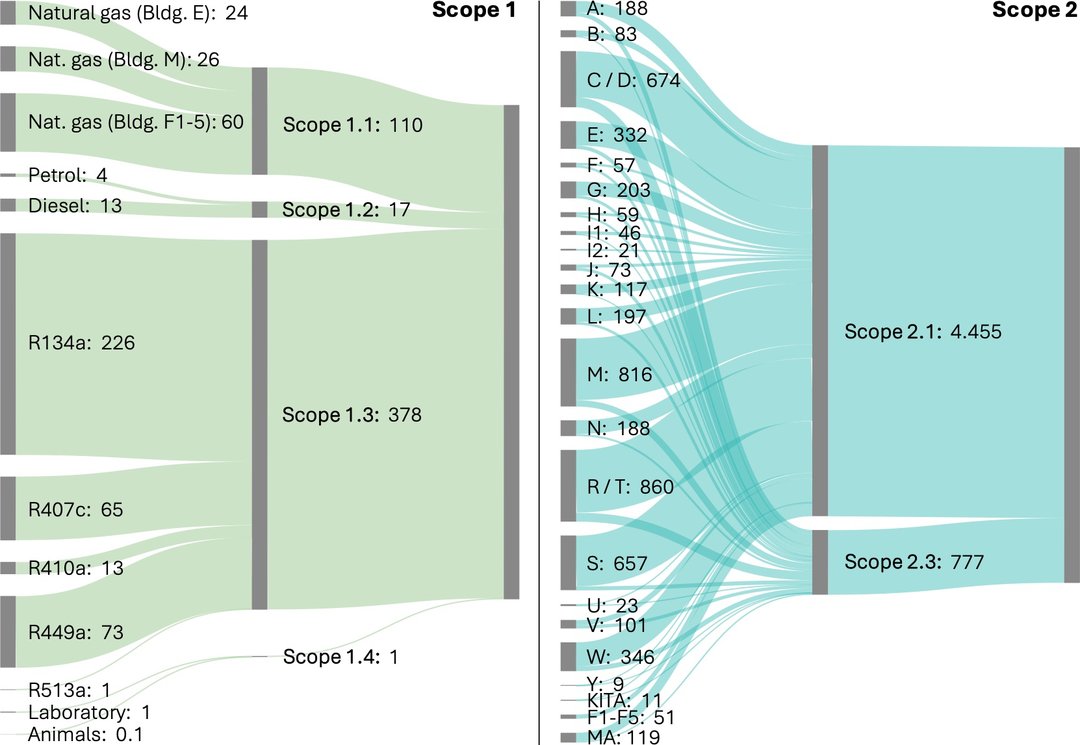
- Buildings and energy remain central fields of action:?Electricity and district heating consumption in university buildings account for the vast majority (91.2%) of directly influenceable emissions (Scope 1+2).
?
- Climate Action & EMAS:?Based on the GHG inventory, reduction potentials were identified and climate protection measures developed, which are detailed in the Climate Action Concept. Furthermore, the University of Augsburg is currently implementing the EMAS environmental management system.
?
- Climate action is a collective responsibility on campus:?Many emissions are linked to everyday decisions—such as the choice of transport, participation in data collection, or energy- and resource-saving behavior. The entire university community can contribute here.
?
GHG Inventory 2024 and Climate Action Concept of the University of Augsburg
To advance climate protection at the University of Augsburg systematically and effectively, it is essential to record greenhouse gas emissions transparently. With its Climate Action Concept 2025, the University of Augsburg presents its first comprehensive GHG inventory, which represents the status quo for the 2024 reporting year and creates an evidence-based foundation for further climate protection at the university.
The concept was developed with funding from the National Climate Initiative and follows the internationally established standards of the GHG Protocol and ISO 14064-1. The GHG inventory is a central instrument for making emission sources visible, tracking developments over time, and identifying the need for action.
?
Scope of accounting
The GHG inventory records emissions from
- Scope 1: Direct emissions (e.g., natural gas consumption, vehicle fleet, and refrigerants)
- Scope 2: Indirect emissions from purchased electricity and district heating
- Scope 3: Other indirect emissions (including mobility, construction, procurement, leased assets, as well as business and student travel)
For universities in Bavaria, the annual preparation of a GHG inventory is mandatory. To ensure a constant framework for annual updates, the Bavarian universities are required to report a so-called “Core Inventory” with a defined scope. This includes all Scope 1 and Scope 2 emissions, as well as specific Scope 3 sources: purchased paper, IT equipment, upstream chains of energy (carriers), waste, air travel, and energy consumption in rented buildings.
The University of Augsburg further reports a “Total Inventory”. In addition to the Core Inventory, this includes other relevant sources such as construction activities, further procurement items, overall travel, and commuting. The goal of the Total Inventory is the full recording of all university emission sources, though it is currently limited by existing data gaps. While the Core Inventory will maintain the same scope every year, the scope of the Total Inventory is determined by the available data.
?
Key results of the GHG accounting 2024
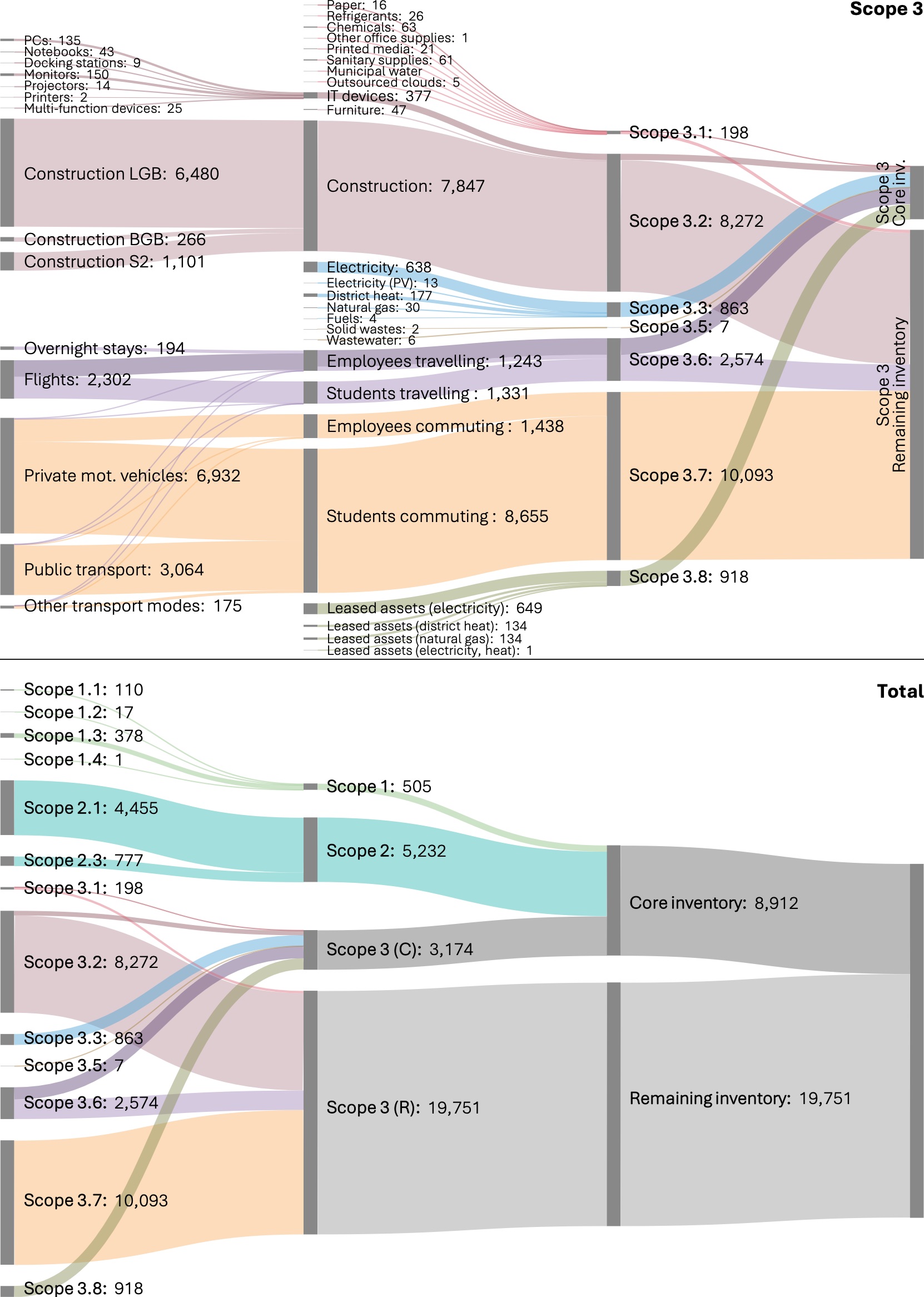
For the 2024 reporting year, a total emission load of 28,662 t CO2 eq. are recorded. The mandatory Core Inventory comprises 8,912 t CO2 eq.
The emissions in the Total Inventory are distributed as follows:
- Scope 1: 505 t CO2 eq.
- Scope 2[1]?: 5,232 t CO2 eq.
- Scope 3 (total): 22,925?t CO2 eq.
?
The vast majority of emissions fall under Scope 3, particularly commuting, construction, and travel. While Scope 1 emissions may seem secondary compared to Scopes 2 and 3, their reduction remains nonetheless vital for a responsible university climate management.
?
?
Current note: The mobility emissions shown here (and thus the numbers in Scope 3 and total) are currently based on an initial rough estimate. Mobility surveys are currently being conducted (until March 15th) to create a better data basis; the emission figures shown here will be updated at the beginning of Q2 2026. If you haven't participated yet, please take ~5 minutes to do so via the link sent by the Quality Agency. Thank you for your support!?
[1] location-based
?
?
?
?
Platzhalter
?
?
?
?
?
Building emissions
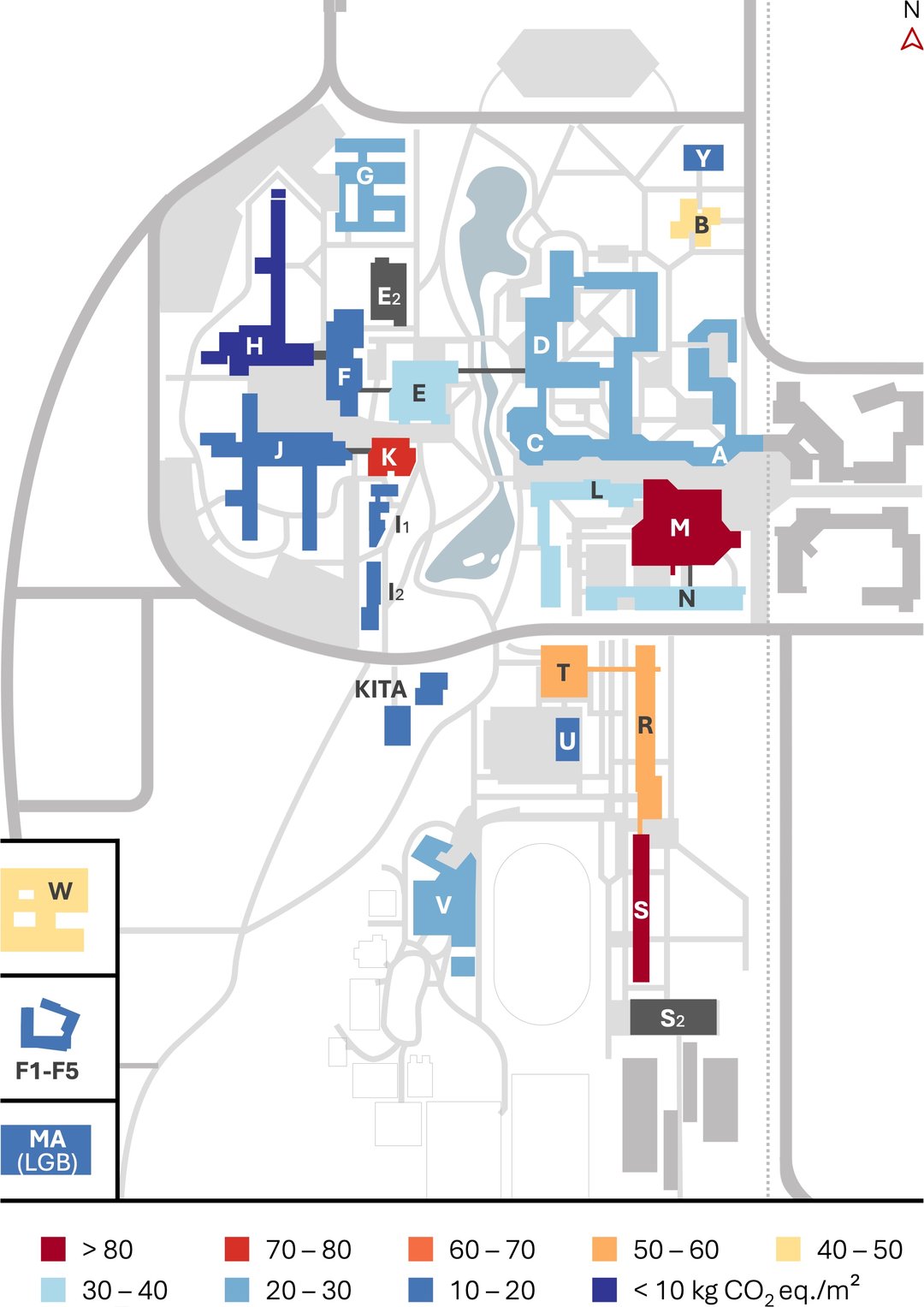
The GHG inventory includes a building-specific analysis of emissions from electricity, district heating, and natural gas. Buildings with incomplete data are marked accordingly; the underlying data will be continuously improved.
?
Platzhalter
?
?
?
?
?
Data Basis and Participation
Creating a GHG inventory involves significant effort in data acquisition and coordination. Around 250 individual data points (as of Dec. 2025) from various departments and external sources were collected, verified, and evaluated.
?
Current note: Mobility data is a key component in the GHG inventory and could hitherto only be evaluated based on estimates and extrapolations. To create a better data basis, Mobility surveys are currently being conducted (until March 15th); the emission figures shown here will this be updated at the beginning of Q2 2026. If you haven't participated yet, please take ~5 minutes to do so via the link sent by the Quality Agency. Thank you for your support!
?
Implementation within the EMAS Framework
The results of the GHG accounting serve as the basis for climate measures within the EMAS environmental management system that is currently being implemented at the university. Based on the Total Inventory, reduction potentials were identified and a concrete catalog of measures was developed. EMAS (‘Eco-Management and Audit Scheme‘) provides the structural framework for planning, checking, and developing climate protection measures and other environment-related actions and indicators.
Taking Responsibility Together
The GHG account shows: A large portion of emissions stems from everyday decisions, such as mobility, energy use, or procurement. Every member of the university can thus contribute to reducing harmful greenhouse gases. Climate action at the University of Augsburg is a collective task requiring a long-term shift in daily practices.
Further Development and Transparency
The GHG inventory will be updated annually. In the meantime, we continuously work to refine the underlying data, especially regarding mobility. A broad participation in surveys helps improve the quality of the inventory.
?
The publication of the GHG accounting 2024 and the Climate Action Concept 2025 marks the University of Augsburg's current reporting status, providing a transparent framework for future climate protection efforts within the university's operations.
?
?
?
→ The Climate Action Concept 2025 of the University of Augsburg (in German) can be downloaded:
HERE
?
?
?
FUNDING PROJECT OF THE NATIONAL CLIMATE PROTECTION INITIATIVE
From October 1, 2023, to October 31, 2025, the Federal Ministry for Economic Affairs and Energy (at the start of funding, the Federal Ministry for Economic Affairs and Climate Protection) is funding the project "KSI: Klimaschutzmanagement - Erstellung eines Integrierten Klimaschutzkonzeptes für die Universit?t Augsburg (KlimKonUniA)" (engl.: “KSI: Climate Protection Management – Creation of an Integrated Climate Protection Concept for the University of Augsburg (KlimKonUniA)”) as part of the National Climate Protection Initiative (funding code 67K20555).??
?
?
National Climate Protection Initiative
With the National Climate Protection Initiative (german: Nationale Klimaschutzinitiative), the German government has been initiating and promoting numerous projects since 2008 that contribute to reducing greenhouse gas emissions. Its programs and projects cover a broad spectrum of climate protection activities: from the development of long-term strategies to concrete assistance and investment support measures. This diversity guarantees good ideas. The National Climate Protection Initiative helps to anchor climate protection locally. Consumers, companies, municipalities, and educational institutions all benefit from it.
?
?
?
?