
Climate change, air quality, and pollen allergies: New scientific recommendations
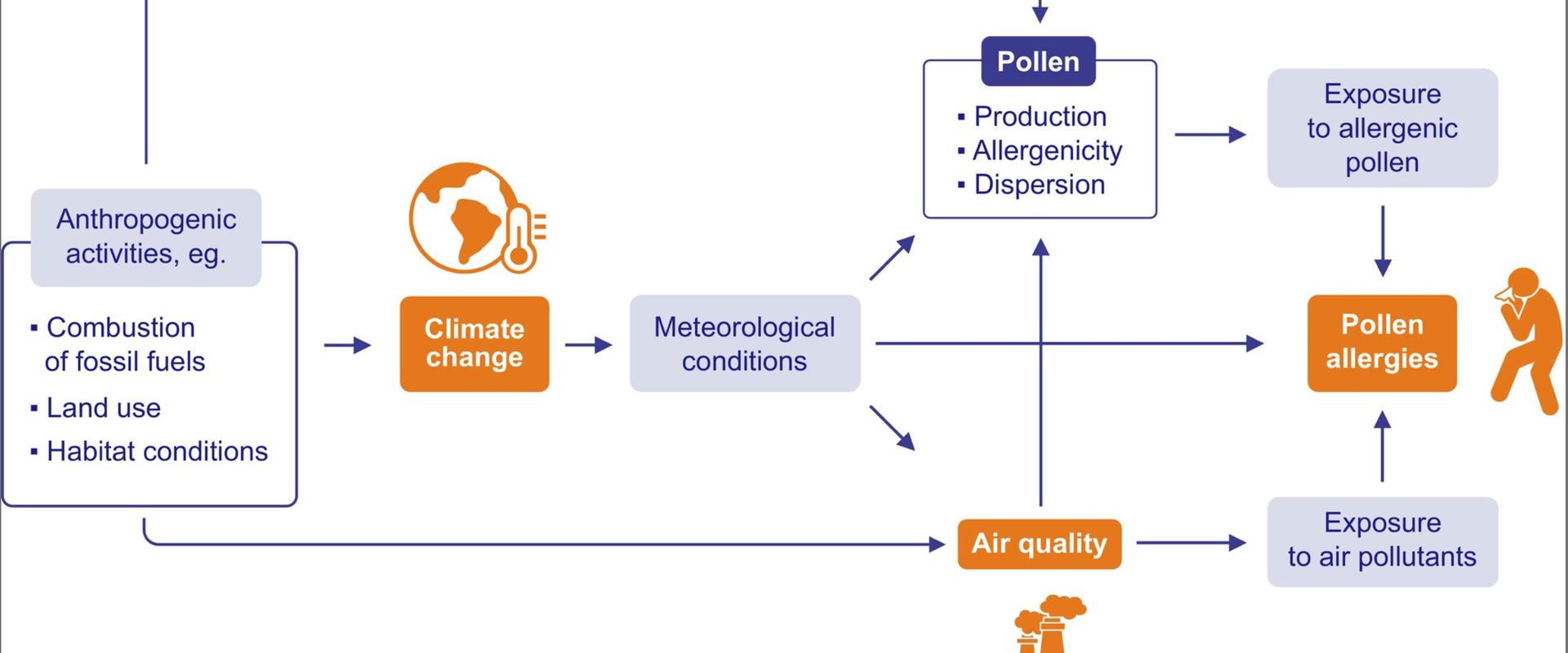
Allergic diseases are among the major health challenges of our time, with a high individual disease burden and considerable costs for the healthcare system. A new international state-of-the-art review now comprehensively examines how climate change, air quality, and pollen exposure interact and influence allergic diseases. The current position paper entitled The lead author of the publication is Prof. Dr. Claudia Traidl-Hoffmann, environmental physician and allergologist at the University of Augsburg and member of the Center for Climate Resilience (ZFK). ? ? The authors show that pollen-related allergic diseases are particularly sensitive to environmental changes show that pollen-related allergic diseases are particularly sensitive to environmental changes Climate change affects flowering times, pollen counts, and the long-distance transport of pollen. Air pollutants can increase the allergenicity of pollen and thus exacerbate symptoms. Meteorological changes also affect air quality and influence the duration, intensity, and severity of allergic symptoms. Allergies are thus becoming a public health issue that is closely linked to questions of climate resilience, urban and environmental planning, and social justice. Greater integration of health perspectives into climate policy. Expansion of early warning systems, environmental monitoring, and pollen forecasts. Better integration of environmental, climate, and health research. Targeted prevention and adaptation strategies for particularly vulnerable population groups. The paper emphasizes that dealing with climate-related health risks—such as allergies—is a central component of societal resilience to climate change. It thus provides an important scientific basis for the work of the ZFK at the University of Augsburg, which is dedicated to researching and strengthening climate resilience in health, the environment, and society. ? ? ?
“Climate Change, Air Quality, and Pollen Allergies – State of the Art and Recommendations for Research and Public Health”
(published in Allergy, DOI: 10.1111/all.70159), leading experts from the fields of environmental medicine, climate research, and allergology summarize the current state of knowledge and formulate concrete recommendations for action.Key findings
Recommendations for policy, healthcare, and research
The position paper formulates clear recommendations:
Contribution to climate resilience