
Centre for Climate Resilience
Recent major flood events as well as the extremely dry and hot summers over the last few years have demonstrated that climate change and its consequences are becoming increasingly noticeable in Central Europe and are already having a major impact on people’s lives. Despite diverse political efforts and growing global awareness of the urgency of reducing greenhouse gas emissions, emissions continue to rise. Climate change is one of the most severe global challenges facing humanity. Both our past and our present actions continue to exert significant influence on the climate and the living conditions of future generations.
?
In view of the irreversibility of climate change impacts, active, sustainable climate policy requires the development and implementation of specific adaptation strategies. In order to maintain our health and prosperity, economic productivity, biodiversity, and long-term sustainable coexistence with the environment, ecological systems as well as our society and economy must become resilient to the impacts of global climate change.
?
Climate resilience entails the reduction of vulnerability to climate impacts and the strengthening of our capacity to adapt. Climate resilience therefore includes a broad spectrum of areas ranging from ecosystems to human health and society, economy, politics, and law. Climate resilience requires a comprehensive transformation.
?
The aim of the Centre for Climate Resilience is to develop the scientific foundations for adapting to the inevitable consequences of climate change, as well as developing holistic and implementable adaptation strategies for application at regional, national, and international levels.
?
?
?
Green Research Network "BRaVE"
The Green Research Network "Building Climate Resilience for a Vital Environment (BRaVE): Identification of Vulnerabilities, Indicators, and Implications for Actions" has started on November 1st, 2024.?The kick-off event took place on 23 January, together with the President of the University, Prof. Dr Sabine Doering-Manteuffel.
?
The aim of BRaVE is to develop interdisciplinary methods to identify climate-related vulnerabilities and to derive quantitative and/or qualitative indicators for the early identification of risks. This will be used to develop sustainable solutions to mitigate these risks. The vulnerabilities to be addressed cover a wide-range of disciplines at the CCR, including geoscientific, resource-economic, logistical, medical, social, political, and legal risks.

Publications and Research
News
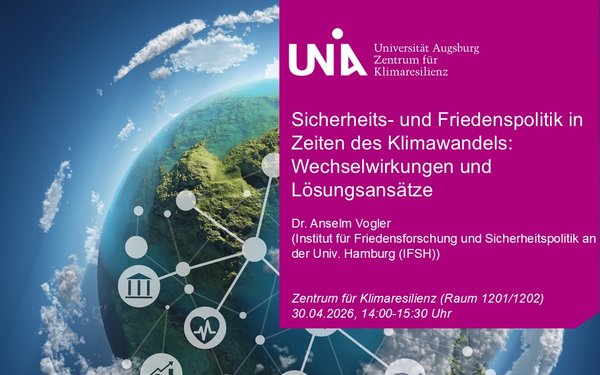
Dr. Anselm Vogler - Security and Peace Policy in the Age of Climate Change: Interactions and Solutions
Climate change and the global ecosystem crisis pose complex security risks to ecosystems, people, and states. How do these uncertainties arise? How do states respond to them in terms of security policy? What role does the military play in this context? And how can peace-promoting measures influence the tension between climate change and insecurity??
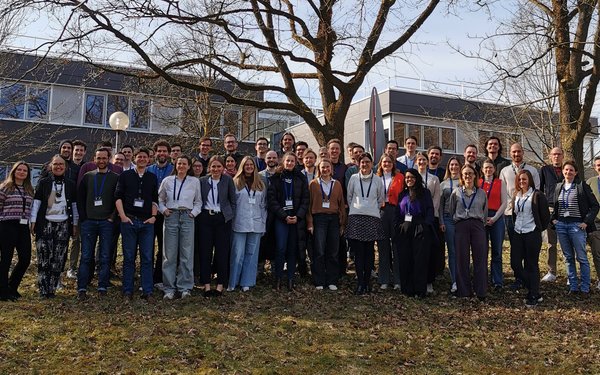
Experiments for the Environment (X4E) Workshop held in Augsburg
WBGU Situation Report: Why Environmental Risks Are Central to Modern Security Strategies – Prof. Dr. Claudia Traidl-Hoffmann Explains the Key Findings
Current Events


Kontakt & Anschrift
Contact & Postal address
?
Centre for Climate Resilience - CCR
Universit?t Augsburg
Universit?tsstra?e 12
86159 Augsburg
?
Tel:??+49 821 598-4802
E-Mail: info@ccr.uni-augsburg.de
?
?
?
Directions & Parking
?
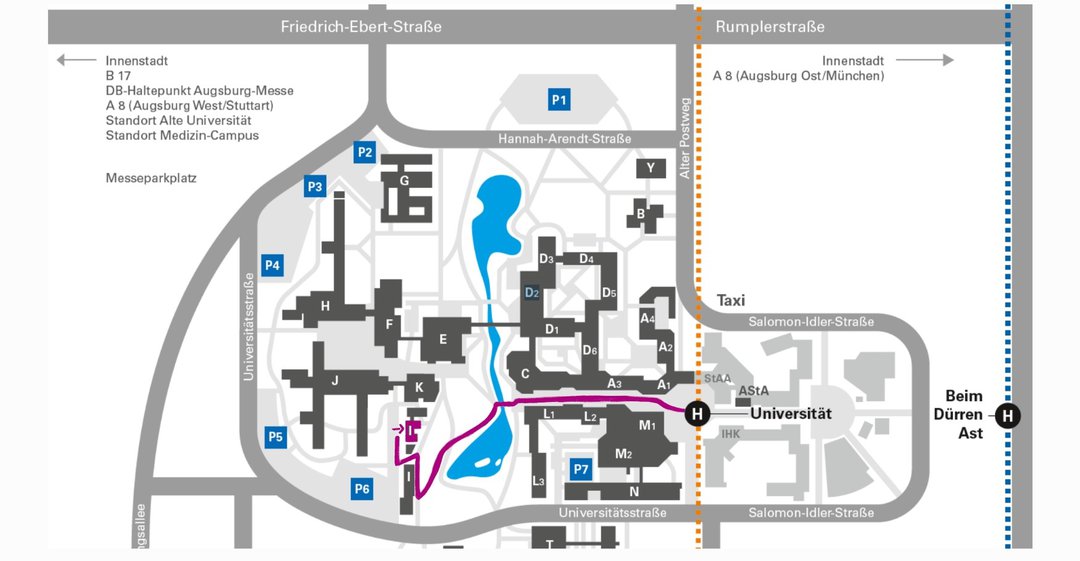
The CCR ist based in the building I on the? campus map.
?
Precise directions on how to get us with public?transport or by car an be found on the bottom of this page.?
Parking: P5 + P6
?
?