
Egg-OLED
Egg-OLED
A true easter-Egg
Different Materials
Have you ever wondered how the screens of your smartphone or TV produce such vivid colors??In OLED displays, light is generated by specially designed organic molecules whose electrical and photophysical properties can be tailored through subtle changes in their chemical structure. This has led to a remarkable evolution of emitter technologies, ranging from fluorescent and phosphorescent systems to thermally activated delayed fluorescence (TADF), exciplex emission, and color conversion using quantum dots.
?
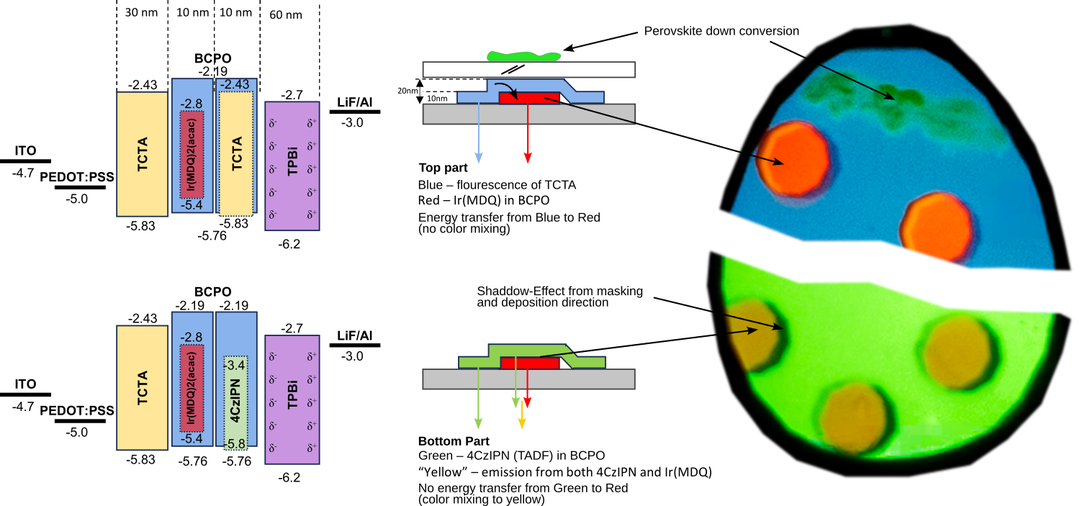
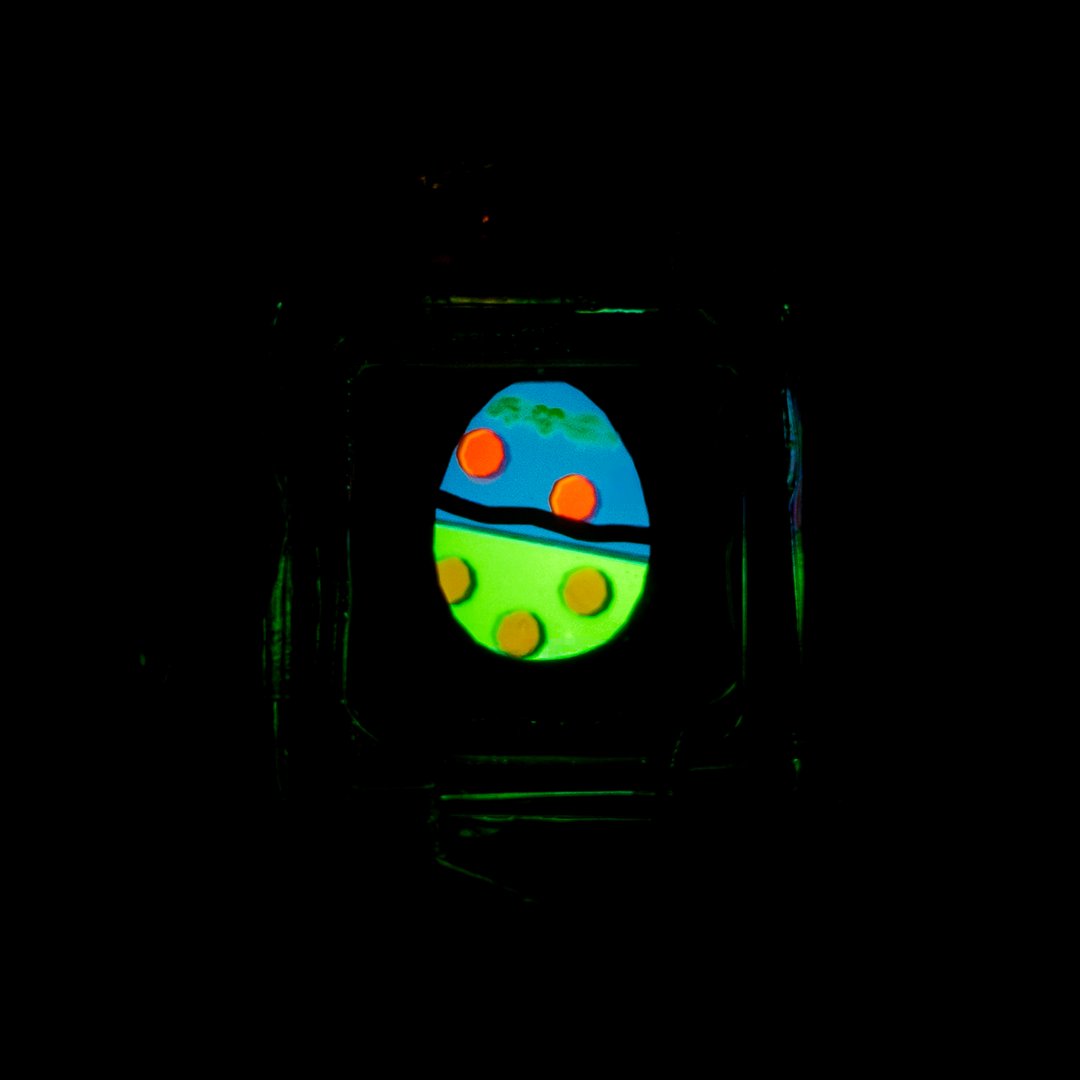
Inspired by the colored Easter eggs of the season, the device shown above visualizes that diversity in a simple and colorful way. It combines blue fluorescence, red phosphorescence and green TADF emission, as well as green color conversion by CsPbBr? quantum dots deposited on a blue-emitting region. By integrating these concepts into a single stack, the device highlights how multiple emission pathways can coexist within one OLED architecture. The device stack needed to be simple, so we searched (and found) for common hole and electron transport materials, that could be combined with all required emitter molecules. A more scientific overview on the structure is given below. Happy easter!
?