拉斯维加斯赌城

图片
April 2, 2026

One atom makes all the difference: Heat transport through molecules controlled in a targeted manner for the first time

In close collaboration with researchers from the University of Michigan (USA), physicists in Augsburg have succeeded for the first time in proving experimentally and theoretically that heat transport through molecules can change by up to a factor of two through the exchange of a single atom. The study was published in the highly renowned journal Nature Materials.

[University of Augsburg]
Read more
Illustration of molecular structures on a dark background.
April 1, 2026

Snapshot: HPSC Lab at the TRUDI 2026 in Cologne

The HPSC Lab participated at the Trixi.jl workshop TRUDI 2026 in Cologne. Out Lab members presented their latest work and developments with Trixi.jl and engaged in various discussions and collaborations with other Trixi.jl users. [High-Performance Scientific Computing]
Read more
March 30, 2026

Postdoctoral Researcher (m/f/d), Faculty of Mathematics, Natural Sciences, and Materials Engineering

department of Physics (Prof. Dr. Nadine Schwierz)

?

application deadline:?Mai 15th, 2026

[Stellenangebote]
Read more
March 27, 2026

2026 Heinz Maier-Leibnitz Prize for mathematician Dominik Schmid

The University of Augsburg is delighted to announce an outstanding honour for one of its early-career researchers: Assistant Professor Dr Dominik Schmid has been awarded the 2026 Heinz Maier-Leibnitz Prize, regarded as Germany’s most prestigious award for researchers in the early stages of their careers. This was announced by the Executive Board of the German Research Foundation (DFG) in Bonn.

[University of Augsburg]
Read more
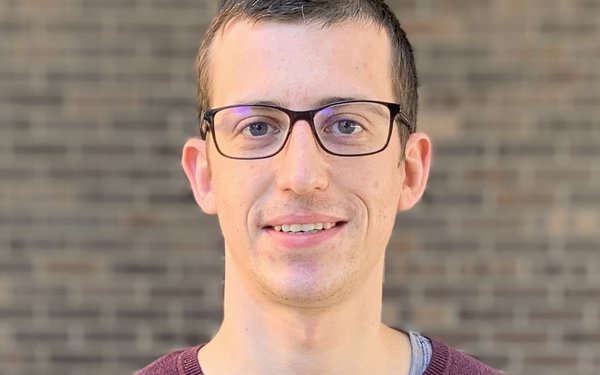
Dominik Schmid
March 24, 2026

Resource Lab to be represented at the CU Ceramic Composites March Meetings 2026 in Bremen
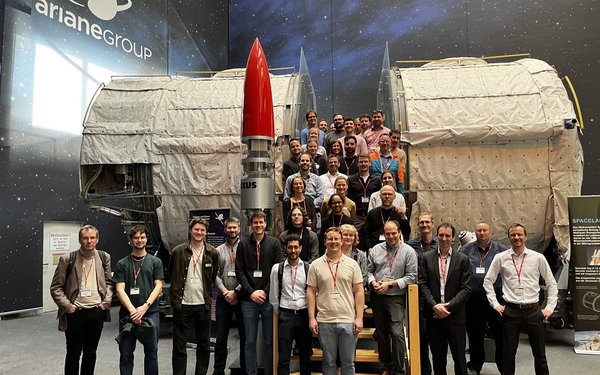
Florian Halter and Lars Wietschel represented the Resource Lab at the “CU Ceramic Composites March Meetings 2026” in Bremen. There, Florian Halter presented the findings of the recently published paper “Quantifying environmental impacts of circular economy approaches through life cycle assessments: A case study in materials science on ceramic matrix composites”. [Resource Lab]
Read more
ResourceLab bei den CU Ceramic Composites March Meetings 2026 in Bremen vertreten
March 20, 2026

Institute Cup 2026: Chair of Experimental Physics V Wins the Title

In an exciting competition, the Chair of Experimental Physics V secured first place. With strong teamwork, dedication, and skillful play, the team prevailed against its competitors and claimed this year’s championship.

[Experimental Physics V]
Read more
March 17, 2026

Felix Schilberth Appointed Special Postdoctoral Researcher at RIKEN
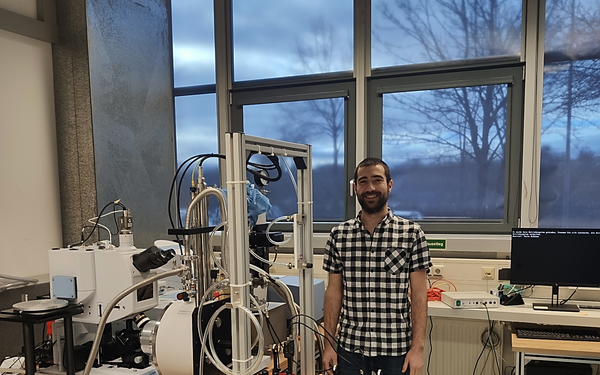
Following the completion of his doctorate last year, Felix Schilberth, an outstanding young scientist from the University of Augsburg, is taking the next step in his academic career by moving to Japan. [Experimental Physics V]
Read more
Dr. Felix Schilberth
March 10, 2026

Invisible magnets for faster IT

A Japanese–German research consortium aims to harness a special class of magnetic materials for ultrafast, energy-efficient data processing: antiferromagnets. The network is coordinated by Prof. Dr. István Kézsmárki at the University of Augsburg and brings together five leading research groups from Japan and Germany. [University of Augsburg]
Read more
Dr. Felix Schilberth in his laboratory in front of a research setup.
Feb. 27, 2026

Snapshot: Multiphysics coupling on hierarchical meshes with refinment

Using Trixi.jl we are able to couple multiphysics domains that are arbitrarily refined. [High-Performance Scientific Computing]
Read more
Jan. 29, 2026

The Resource Lab of the University of Augsburg is a host institution of the Mobility and Peer Mentoring Programme to Support Small Island Developing States (SIDS)
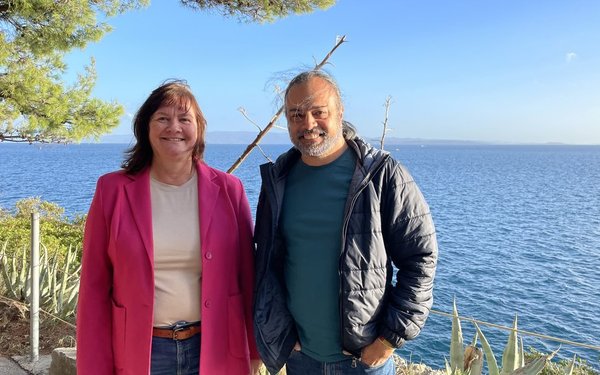
Together with visiting professor Prof. Dr. Simron Singh, the Resource Lab of the University of Augsburg develops solution-oriented approaches in the field of Industrial Ecology. A particular focus is placed on adaptation measures for small island states. Currently, the research group is investigating the resource requirements of the Maldives in the context of future sea-level rise. [Resource Lab]
Read more
Frau Dr. Andrea Thorenz und Herr Prof. Dr. Simron J. Singh auf der Summer School in Split, Kroatien.
Jan. 20, 2026

Information Event on Choosing a Specialization in the Bachelor’s Degree Program in Industrial Engineering

For students in the 3rd semester of Industrial Engineering, an information event on the seven specializations will take place on February 10 at 5:00 p.m. in room T-1001. Lecturers from the different specializations will present the content and career prospects in their respective fields and will be available to answer questions. [Resource and Chemical Engineering]
Dec. 15, 2025

Snapshot: AI and Climate: Michael Resch at the Public Climate School

As part of the Public Climate School 2025, Prof. Michael Resch (HLRS Stuttgart) gave a well-attended public lecture at the University of Augsburg on the interplay between artificial intelligence, high-performance computing, and energy consumption. [High-Performance Scientific Computing]
Read more
Dec. 12, 2025

Snapshot: CAAPS Workshop on Demystifying Numerical Dissipation in Simulation Codes

On the 2nd and 3rd of December we hosted the CAAPS workshop on Demystifying Numerical Dissipation in Simulation Codes. We had two external and one internal talk, after which we engaged in some lively discussions and hands-on activities on how to determine numerical dissipation in simulation codes. [High-Performance Scientific Computing]
Read more
Nov. 20, 2025

Upcoming: CAAPS event on Demystifying Numerical Dissipation in Simulation Codes

On the 2nd and 3rd of December we will be holding the CAAPS workshop on Demystifying Numerical Dissipation in Simulation Codes in Augsburg. [High-Performance Scientific Computing]
Read more
Nov. 3, 2025

Snapshot: Inaugural lecture on scientific computing in the age of AI

On 27th October 2025, Michael Schlottke-Lakemper gave his inaugural lecture at the University of Augsburg. The (German) title of the talk was

Wissenschaftliches Rechnen im KI-Zeitalter: Zwischen Rechen- und Denkmaschine

which roughly translates to "Scientific Computing in the AI Age: From Number Crunchers to Thinking Machines".

[High-Performance Scientific Computing]
Read more
Oct. 24, 2025

New paper: Robust and efficient pre-processing techniques for particle-based methods including dynamic boundary generation

Our new paper "Robust and efficient pre-processing techniques for particle-based methods including dynamic boundary generation" has been published in the journal Computer Physics Communication. [High-Performance Scientific Computing]
Read more
Oct. 16, 2025

Voltage Switches Antiferromagnetic States on Nanosecond Timescales

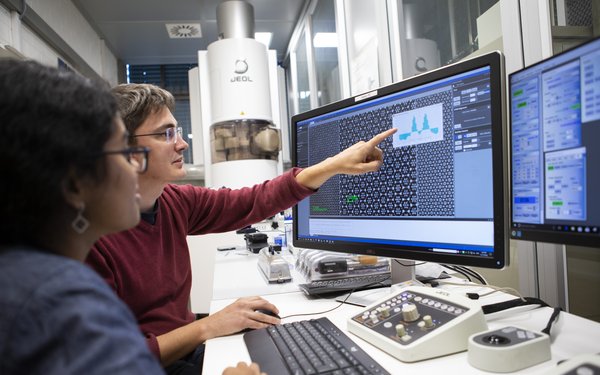
Physicists at the University of Augsburg together with collaborators from the Budapest University of Technology and Economics and Rutgers University, USA, have successfully switched an antiferromagnetic state in an insulator by voltage pulses, within just a few tens of billionths of a second. Their findings were recently published in Physical Review Letters.?

[University of Augsburg]
Read more
Zwei Besch?ftigte der Universit?t Augsburg am PC-Arbeitsplatz
Oct. 16, 2025

New paper: Fourth-order paired-explicit Runge-Kutta methods

Our paper "Fourth-order paired-explicit Runge-Kutta methods" has been published in the journal Computational Science and Engineering. [High-Performance Scientific Computing]
Read more
Oct. 9, 2025

Snapshot: HPSC Lab at the KLAIM 2025 in Kaiserslautern

At this year's KLAIM conference, our team member Simon Candelaresi presented some of our latest work, which lead to a few discussions. [High-Performance Scientific Computing]
Read more
Oct. 7, 2025

Landfill Mining – New Construction Materials from Old Waste

At the Chair of Resource and Chemical Engineering (Prof. Vollprecht) and the Chair of Technology Assessment (Prof. Jan Paul Lindner), a joint doctoral researcher (m/f/d) is being sought for the research project RueBe (“Dismantling of Construction and Excavation Waste Landfills for the Production of High-Quality Building Materials”).

[Resource and Chemical Engineering]
Sept. 29, 2025

Snapshot: HPSC Lab at the SNuBIC 2025 retreat in Forsbach

The HPSC Lab met in Forsbach to discuss the latest developments within the SNuBIC group. [High-Performance Scientific Computing]
Read more
Sept. 23, 2025

New paper: Secure numerical simulations using fully homomorphic encryption

Our paper "Secure numerical simulations using fully homomorphic encryption" has been published in Computer Physics Communications. [High-Performance Scientific Computing]
Read more
Sept. 19, 2025

Snapshot: Workshop on reproducible scientific computing and HPC

On September 16th and 17th, the HPSC Lab gave a hands-on workshop on reproducible scientific computing and HPC using the Julia programming language. [High-Performance Scientific Computing]
Read more
Aug. 7, 2025

Snapshot: Advanced multiphysics coupling using p4est meshes

We successfully implemented a multiphysics coupling of an Euler system with an MHD system using the flexible p4est meshes. [High-Performance Scientific Computing]
Read more
Aug. 4, 2025

New Research Project at the Chair of ResEng – PhD Position Open for Applications

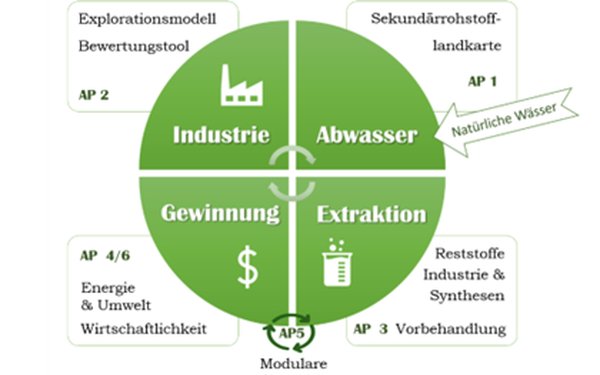
The University of Augsburg, in collaboration with the Karlsruhe Institute of Technology, Leiblein GmbH, and G.E.O.S. Ingenieurgesellschaft mbH, has received funding for a research project focused on the recovery of critical metals from industrial wastewater. As part of this project, a position is available at the Chair of Resource and Chemical Engineering.

?

We look forward to your applications.

[Resource and Chemical Engineering]
July 14, 2025

New submission: Robust and efficient pre-processing techniques for particle-based methods including dynamic boundary generation

Together with Erik Faulhaber, Sven Berger, Christian Wei?enfels und Gregor Gassner, we have submitted our paper "Robust and efficient pre-processing techniques for particle-based methods including dynamic boundary generation". [High-Performance Scientific Computing]
Read more
July 10, 2025

Breakthrough in Kitaev Materials: control of competing interactions through pressure

Physicists from the University of Augsburg have achieved an important breakthrough in their work with so-called Kitaev materials - a basis for quantum spin liquids. This insight from basic research is important for the development of future technologies. The results, which were obtained at the Chair of Experimental Physics VI, were published in the highly renowned journal Nature Communications.

[University of Augsburg]
Read more
Eine Hand h?lt einen messingfarbenen Stab neben einem kompliziert aussehenden Ger?t, dem Magnetometer.
June 16, 2025

New submission: Automatic differentiation for Lax-Wendroff-type discretizations

Together with Arpit Babbar and Hendrik Ranocha, we have submitted our paper "Automatic differentiation for Lax-Wendroff-type discretizations".

[High-Performance Scientific Computing]
Read more
June 11, 2025

Quantum hard disks on a lattice

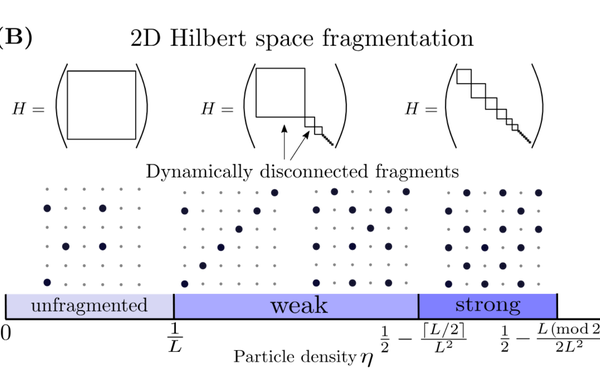
We formulate a quantum version of the hard-disk problem on lattices, which exhibits a natural realization in systems of Rydberg atoms. We find that quantum hard disks exhibit unique dynamical quantum features in 1D and 2D. We link this peculiar quantum behavior to quantum many-body scars. Our study highlights the potential of constrained 2D quantum matter to display unique dynamical behaviors. [Theoretical Physics III]
Read more
Quantum hard-disks illustration
May 27, 2025

Talk: Sustainable research software for accessible high-performance computing

Michael gave a talk on "Sustainable research software for accessible high-performance computing" during the 39th Workshop on Sustained Simulation Performance at HLRS, Stuttgart. [High-Performance Scientific Computing]
Read more
May 19, 2025

New lab member: Vivienne Ehlert

Vivienne Ehlert has joined the High-Performance Scientific Computing Lab on 15th May 2025 as a PhD student.

?

[High-Performance Scientific Computing]
Read more
May 7, 2025

Snapshot: Magnetic reconnection simulations using Trixi.jl.

We used Trixi.jl to simulate the 2d reconneciton of magnetic field lines in 2d with a magnetohydrodynamic model. [High-Performance Scientific Computing]
Read more
May 6, 2025

Snapshot: Guest talk by HLRS scientist Johannes Gebert

Today, Johannes Gebert from HLRS gave a talk titled "Enabling Massively Parallel Simulations of Directly Discretized CT Scans of Human Bones" at the University of Augsburg. [High-Performance Scientific Computing]
Read more
April 30, 2025

Microscopic evidence for hydride high-Tc superconductivity

An international research team comprising two researchers from the University of Augsburg reported in Nature the first detection of the superconducting gap in high-pressure high-Tc hydrides. They synthesized and measured planar tunnel junctions of H3S under pressures exceeding 1.5 mega bar and detected a record-large superconducting gap, evidencing hydride high-Tc superconductivity ??

[Experimental Physics VI]
Read more
Website notice hydride superconducting gap
March 25, 2025

Kármán Conference on Sustainable Computational Science & Engineering 2025

Between March 16 and 19, 2025, the HPSC Lab participated in the Kármán Conference on Sustainable Computational Science & Engineering 2025. [High-Performance Scientific Computing]
Read more
March 11, 2025

Talk: Using TRIXI.JL for Adaptively Coupling Multiphysics Problems

[High-Performance Scientific Computing]
March 11, 2025

Snapshot: Minisymposium on multiphysics coupling at the CSE25 in Fort Worth

We organized a minisymposium on coupled multiphysics problems at the CSE25 conference. [High-Performance Scientific Computing]
Read more
Feb. 18, 2025

New paper: Generalized upwind SBP operators for nodal DG methods

Our paper "Generalized upwind summation-by-parts operators and their application to nodal discontinuous Galerkin methods" has been published in the Journal of Computational Physics. [High-Performance Scientific Computing]
Read more
Feb. 5, 2025

PFAS: how to better clean soil from ‘forever chemicals’

Soil contaminated with harmful perfluorinated and polyfluorinated alkyl substances (PFAS) is difficult to clean, a complete remediation is often not possible. To improve the remediation process, researchers at the University of Augsburg are trialling various cleaning methods. Their work is now being financially supported by the Bavarian Research Foundation.

[University of Augsburg]
Read more
Gro?er, brauner Erdhügel in der Landschaft

Search