

Landmarks in different environments
Urban Areas
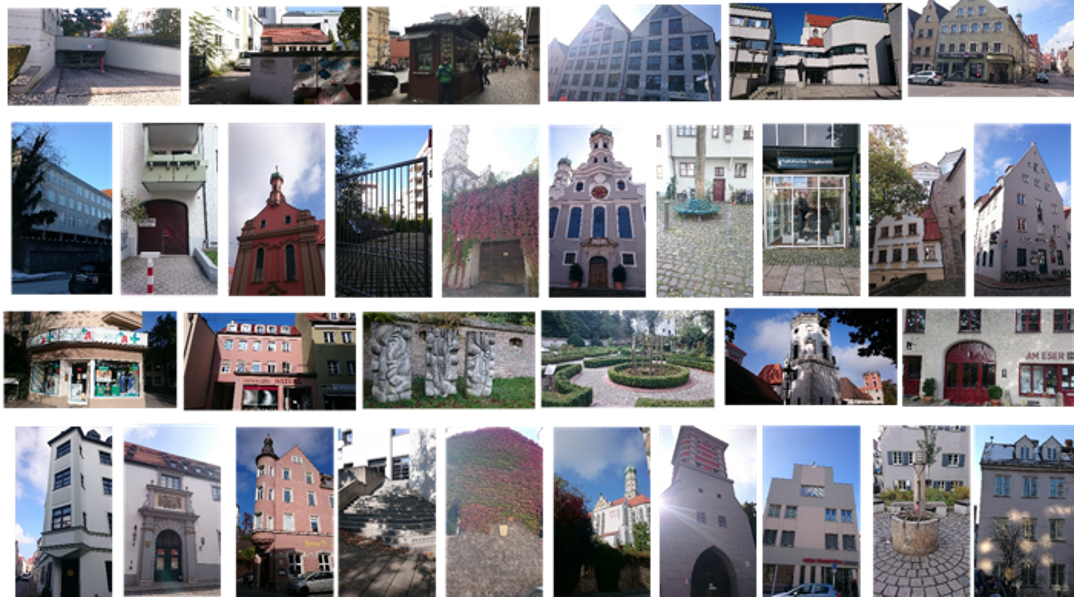
Landmarks in urban areas play a crucial role in pedestrian navigation and spatial cognition. Although numerous studies have shown that landmarks are important for navigation, almost all navigation systems still implement a shortest-route algorithm without considering them. To address this, researchers have proposed weighting methods for Dijkstra’s shortest route algorithm to generate “landmark routes,” which include salient landmarks and differ from purely shortest routes in experience rather than efficiency. The extra distance and time required for these routes are generally acceptable, making them practical alternatives. Further studies comparing shortest and landmark routes found no major differences in navigation behavior, memorization, or communication, but participants were faster in reversing landmark routes. Interestingly, participants often preferred the shortest routes, possibly due to environmental factors affecting satisfaction. Recent work also shows that geosocial data can effectively identify landmarks, using a “GeoSocial Score” to capture their social salience within urban environments.
Non-Urban Areas
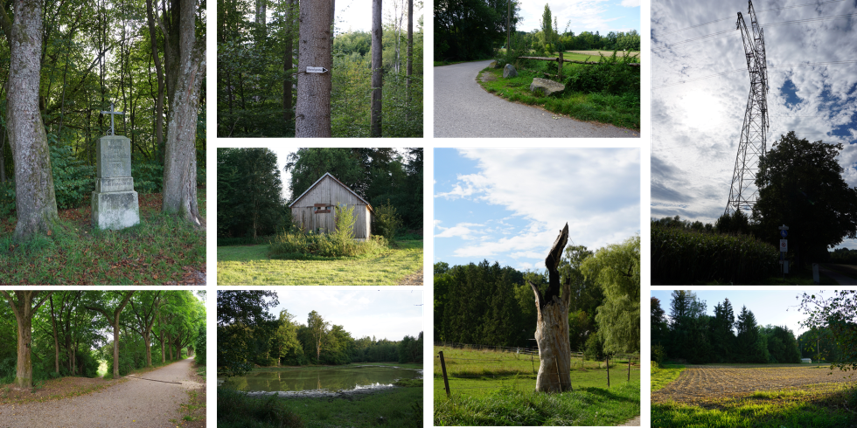
Landmarks in non-urban areas, such as rural or mountainous regions, play a vital role in human navigation and orientation, particularly for activities like hiking, ski touring, or mountain rescue. Unlike urban environments, non-urban areas lack structured layouts and dense built features, relying instead on natural and sparse man-made or animal-made landmarks, including rivers, cliffs, power lines, wayside crosses, anthills, or bird nests. To improve navigation in these environments, researchers have developed models to formally define the landmark salience of geographic features. Comparative studies show that rural-specific models effectively identify semantically meaningful landmarks, while urban-based models tend to prioritize natural forms. Surveys confirm that both approaches largely correspond with the landmarks humans naturally select for orientation. To support practical applications, landmark ontologies are being developed in Finland, France, and Germany, aiming to create a cross-national framework that categorizes non-urban landmarks by type, salience, and function. These ontologies enable consistent integration of landmarks into navigation aids, hiking maps, and rescue planning tools.
?